Fall Savings Happening Now!
Step-by-Step Guide to Safely Removing Tree Stumps with Grinding
Why Grinding Depth Matters for Jefferson County Properties
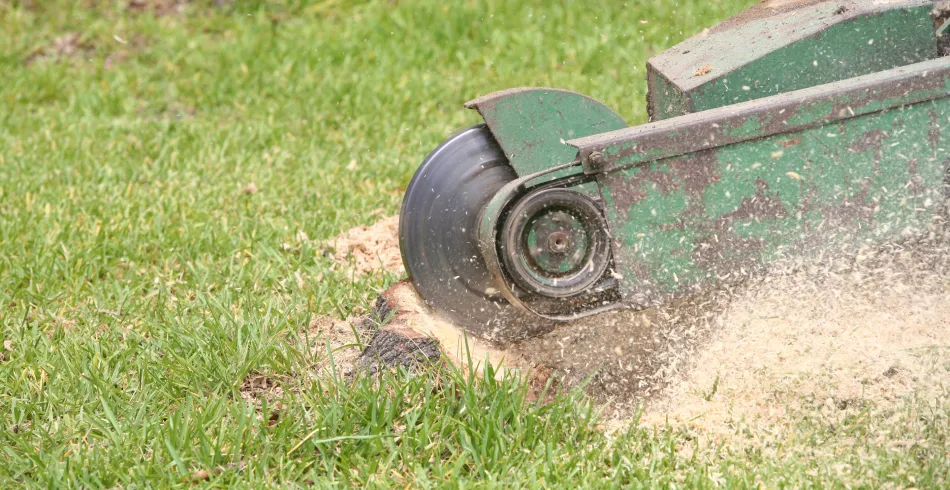
Stump grinding is the mechanical process of reducing a tree stump to wood chips using a specialized rotating cutting wheel. The grinder’s carbide-tipped teeth chip away at the wood, typically grinding 6 to 12 inches below ground level to ensure the root crown is completely removed. This method is faster and less invasive than stump removal, which involves excavating the entire root system.
Professional-grade stump grinders range from walk-behind units for small stumps to self-propelled machines weighing over 1,000 pounds for larger jobs. The grinding depth matters because surface roots left behind can sprout new growth or interfere with landscaping. In the Denver metro area, clay-heavy soil means roots often spread wider than expected, making thorough grinding essential for properties in Wheat Ridge and Jefferson County.
The process generates a substantial pile of wood chips that can be repurposed as mulch or hauled away. Most residential stumps take 30 minutes to two hours to grind completely, depending on size, wood hardness, and root complexity.
Avoiding Underground Utility Strikes in Jefferson County
Before starting any stump grinding work, proper safety equipment is non-negotiable. You’ll need ANSI-rated safety glasses or a full face shield, hearing protection rated for at least 25 decibels of noise reduction, steel-toed boots, heavy work gloves, and long pants. Flying wood chips and debris can cause serious eye injuries, and the grinder’s noise level often exceeds 100 decibels.
Site preparation begins with calling 811 at least two business days before you plan to grind. Colorado law requires utility locates before any digging or grinding work. Gas lines, water mains, electrical conduits, and fiber optic cables often run closer to the surface than homeowners realize, especially in older Wheat Ridge neighborhoods where infrastructure mapping may be incomplete.
Clear a 10-foot radius around the stump of rocks, lawn furniture, sprinkler heads, and anything else that could become a projectile or damage the grinder. Mark any underground irrigation lines with flags. Trim the stump as close to ground level as possible using a chainsaw to reduce grinding time and equipment wear. Remove any metal objects like nails, screws, or wire that may be embedded in the wood.
How to Grind Through Colorado Clay and Surface Roots
Position the grinder so the cutting wheel is directly above the stump edge. Start the machine according to the manufacturer’s instructions and engage the wheel at low speed. Raise the wheel to full height, then sweep it slowly from side to side across the stump surface, lowering it gradually with each pass. Work in a sweeping motion rather than forcing the wheel into the wood, letting the carbide teeth do the work.
Grind the stump down in layers, typically removing 3 to 4 inches per pass. As you reach ground level, begin working outward to grind the major surface roots. Most rental grinders can reach 6 to 12 inches below grade, though professional equipment can go deeper if needed for complete root crown removal.
Periodically stop to rake away wood chips so you can see your progress and check for obstacles. The chips pile up quickly and can hide unground wood or roots. If you encounter rocks or extremely hard roots, work around them rather than forcing the wheel, which can damage the cutting teeth. Blade replacement on rental equipment can cost hundreds of dollars.
Once the stump and visible roots are ground below the desired depth, rake the wood chips back into the hole and water them down to help settling. The chips can be left as mulch, though they’ll compact over time. For a level surface suitable for planting or sod, you’ll need to fill the depression with topsoil after the chips settle.
When a Wheat Ridge Stump Is Too Risky for DIY
Stump grinding carries real risks that escalate quickly without proper experience. The rotating cutting wheel spins at high speed and can catch clothing, throw debris at dangerous velocities, or cause loss of control on uneven terrain. Rental equipment is heavy and difficult to maneuver, particularly on slopes or in tight spaces. Operator fatigue increases accident risk, and most DIY projects take significantly longer than anticipated.
Underground utility strikes are the most serious hazard. Even with utility locates, private lines like irrigation systems, low-voltage landscape lighting, and French drains aren’t marked by 811 services. A utility strike can result in thousands in repair costs, service interruptions, or in the case of gas lines, life-threatening situations. Properties in Jefferson County often have complex underground systems that aren’t documented on any map.
Professional stump removal services make sense when the stump is large (over 20 inches diameter), close to structures or utilities, on a slope, or part of a multi-stump project. The cost difference between rental equipment, your time, and potential mishaps versus hiring experienced operators often favors professionals, especially when you factor in liability coverage and guaranteed results.
Arbor Tech handles stump grinding throughout the Denver metro area with commercial-grade equipment that removes stumps faster and more completely than rental machines. Our team knows the soil conditions, common utility layouts, and root patterns typical of Wheat Ridge properties, and we carry full insurance for the rare cases when something unexpected appears underground. If you’re facing a difficult stump near your foundation, driveway, or irrigation system, getting a professional assessment before renting equipment can save substantial headaches.
Hidden Expenses That Make DIY Grinding More Expensive
Stump grinder rentals typically cost between $100 and $400 per day depending on machine size, with half-day rates sometimes available for small jobs. You’ll also need to factor in fuel, transportation costs if you don’t have a suitable trailer, and potential damage deposits. Many rental companies require pickup and return during business hours, which can limit your actual working time and may force a two-day rental for a one-day job.
Blade sharpening or replacement due to rocks or metal contact can add $50 to $300 to your costs. Most rental agreements make you liable for damage beyond normal wear, and the definition of normal wear varies by company. If you hit a concrete footer, underground metal, or burn out the engine through improper operation, you may be responsible for repair costs that exceed the machine’s daily rental rate many times over.
Walk-behind grinders are suitable for stumps up to 12 inches in diameter and can fit through standard fence gates. Mid-size self-propelled units handle stumps up to 24 inches and offer more grinding power but require wider access. Large stumps, multiple stumps, or stumps with extensive root systems often need commercial equipment that’s simply not available to rent, particularly the crane-mounted grinders used for stumps in tight spaces or on steep slopes common in Golden and Applewood.
Professional stump grinding services typically charge by stump diameter, starting around $100 for small stumps and scaling up based on size and complexity. When you price out rental equipment, safety gear you may need to purchase, your time, and the physical effort involved, professional services often deliver better value, particularly for property owners who don’t already own the necessary safety equipment or have experience operating heavy machinery. Contact us for a straightforward quote on your stump removal project with no obligation to move forward.