Save on Winter Tree Services
Mastering Tree Trimming: The Ultimate DIY Guide for Homeowners
Understanding When and Why to Trim
Tree trimming might seem intimidating at first, but with the right knowledge and approach, many homeowners can safely handle basic pruning tasks themselves. Whether you’re dealing with overgrown branches blocking your view of the Front Range or simply want to maintain the health of your landscape trees, understanding proper trimming techniques makes all the difference.
Before you pick up those pruning shears, it’s important to recognize what you can safely handle and when to call in professionals. Small branches under three inches in diameter, low-hanging limbs within easy reach, and routine maintenance cuts are generally safe DIY territory. However, anything involving ladders near power lines, large limbs that could damage property if they fall, or trees close to your home should be left to certified arborists who have the proper equipment and insurance.
The trees in Wheat Ridge and surrounding areas face unique challenges, from sudden spring snowstorms that can break weakened branches to the intense UV exposure of our high-altitude summers. Regular trimming not only keeps your property looking sharp but also helps your trees withstand these environmental stresses by removing dead wood and promoting stronger growth patterns.
Essential Tools and Safety Gear
Timing matters tremendously when it comes to tree trimming. In Colorado’s Front Range climate, late winter to early spring—typically February through April—offers the ideal window for most pruning work. During this dormant period, trees haven’t yet begun their spring growth surge, which means they’ll heal faster and you can easily see the branch structure without leaves blocking your view.
That said, different tree species have different needs. If you’re trimming fruit trees, late winter pruning encourages better fruit production. For spring-flowering trees like crabapples, wait until immediately after they bloom to avoid cutting off this year’s flowers. Oak trees present a special case: never trim them during April through June when oak wilt disease spreads most actively through fresh cuts.
Dead or hazardous branches are the exception to seasonal rules. If you spot a broken limb hanging precariously after one of our surprise May snowstorms or notice dead wood that could fall on your car, address it immediately regardless of the calendar. Safety always takes priority over optimal timing.
The reasons for trimming go beyond aesthetics. Proper pruning improves air circulation through the canopy, reducing fungal disease problems that thrive in our afternoon thunderstorm season. Removing crossing branches prevents bark damage that invites pests. Thinning dense growth allows sunlight to reach interior branches and the landscape below, promoting healthier overall growth. Strategic cuts also direct growth away from structures, power lines, and areas where branches could cause problems down the road.
Proper Cutting Techniques That Promote Healing
Investing in quality tools makes trimming safer, easier, and better for your trees. Start with sharp bypass pruners for branches up to three-quarters of an inch thick. Unlike anvil-style pruners that crush stems, bypass pruners make clean cuts that heal quickly. For branches between three-quarters of an inch and two inches, you’ll need loppers with long handles that provide leverage for thicker wood.
A pruning saw handles branches from two to three inches in diameter. Look for a curved blade with aggressive teeth designed specifically for green wood. Standard carpentry saws don’t cut efficiently through living branches and will leave you exhausted and frustrated. For branches just beyond your reach, a pole pruner extends your range without requiring a ladder, though it takes practice to make accurate cuts from a distance.
Safety gear isn’t optional. Heavy-duty work gloves protect your hands from blisters, splinters, and the sharp edges of cut branches. Safety glasses shield your eyes from sawdust and small debris that inevitably falls when you’re working overhead. If you’re cutting anything above shoulder height, wear a hard hat—even small branches can deliver a painful blow when they drop unexpectedly.
Before every trimming session, inspect your tools. Dull blades tear bark instead of cutting cleanly, creating wounds that heal slowly and attract disease. Sharpen or replace blades as needed, and clean them with rubbing alcohol between trees to avoid spreading pathogens. A little tool maintenance goes a long way toward protecting your investment in your landscape.
Common Mistakes to Avoid
Where you make your cut determines how well the tree heals. The branch collar is the slightly swollen area where a branch meets the trunk or a larger branch. This collar contains specialized cells that seal wounds and prevent decay from entering the main trunk. Always cut just outside the branch collar, removing the branch but leaving the collar intact. Cutting flush with the trunk removes these protective cells and actually slows healing.
For branches larger than one inch in diameter, use the three-cut method to prevent bark from tearing down the trunk. Make your first cut on the underside of the branch, about 12 inches from the trunk, cutting about one-quarter of the way through. Your second cut goes on top of the branch, an inch or two farther out from the first cut, removing the bulk of the branch’s weight. Finally, make your finishing cut just outside the branch collar to remove the remaining stub. This technique seems like extra work, but it prevents the ugly bark tears that can take years to heal properly.
The angle of your cut matters too. For smaller branches, make cuts at a slight angle just above a bud that faces the direction you want new growth to go. The cut should slope away from the bud so water doesn’t collect and cause rot. For larger branches being removed entirely, the cut angle is less critical as long as you’re cutting to the branch collar correctly.
Resist the urge to apply wound dressing or tree paint. Research has shown these products don’t prevent decay and may actually trap moisture against the wound, promoting rot. Trees have evolved to seal their own wounds effectively—your job is simply to make clean cuts in the right locations and let the tree’s natural defenses do their work.
Knowing Your Limits and When to Call Professionals
Topping—cutting main branches back to stubs—ranks as the most damaging mistake homeowners make. Despite persistent myths that topping controls size or makes trees safer, it actually does the opposite. Topped trees respond with rapid, weakly attached regrowth that’s more likely to break in our fierce spring windstorms. The large wounds from topping cuts rarely seal properly, inviting decay into the tree’s main structure. If a tree has outgrown its space, selective thinning or professional crown reduction is the answer, not topping.
Over-pruning stresses trees and leaves them vulnerable. As a general rule, never remove more than 25 percent of a tree’s canopy in a single year. Trees need their leaves to produce energy through photosynthesis, and removing too much foliage at once starves the root system. This is especially important in our climate where trees already work hard to survive temperature swings and limited water.
Lion-tailing, the practice of removing all interior branches and leaving foliage only at branch tips, creates another set of problems. This might look tidy, but it concentrates weight at the ends of branches while removing the small interior branches that provide stability. In our high wind conditions, lion-tailed branches are more likely to break. Trees should maintain a natural distribution of foliage throughout the canopy.
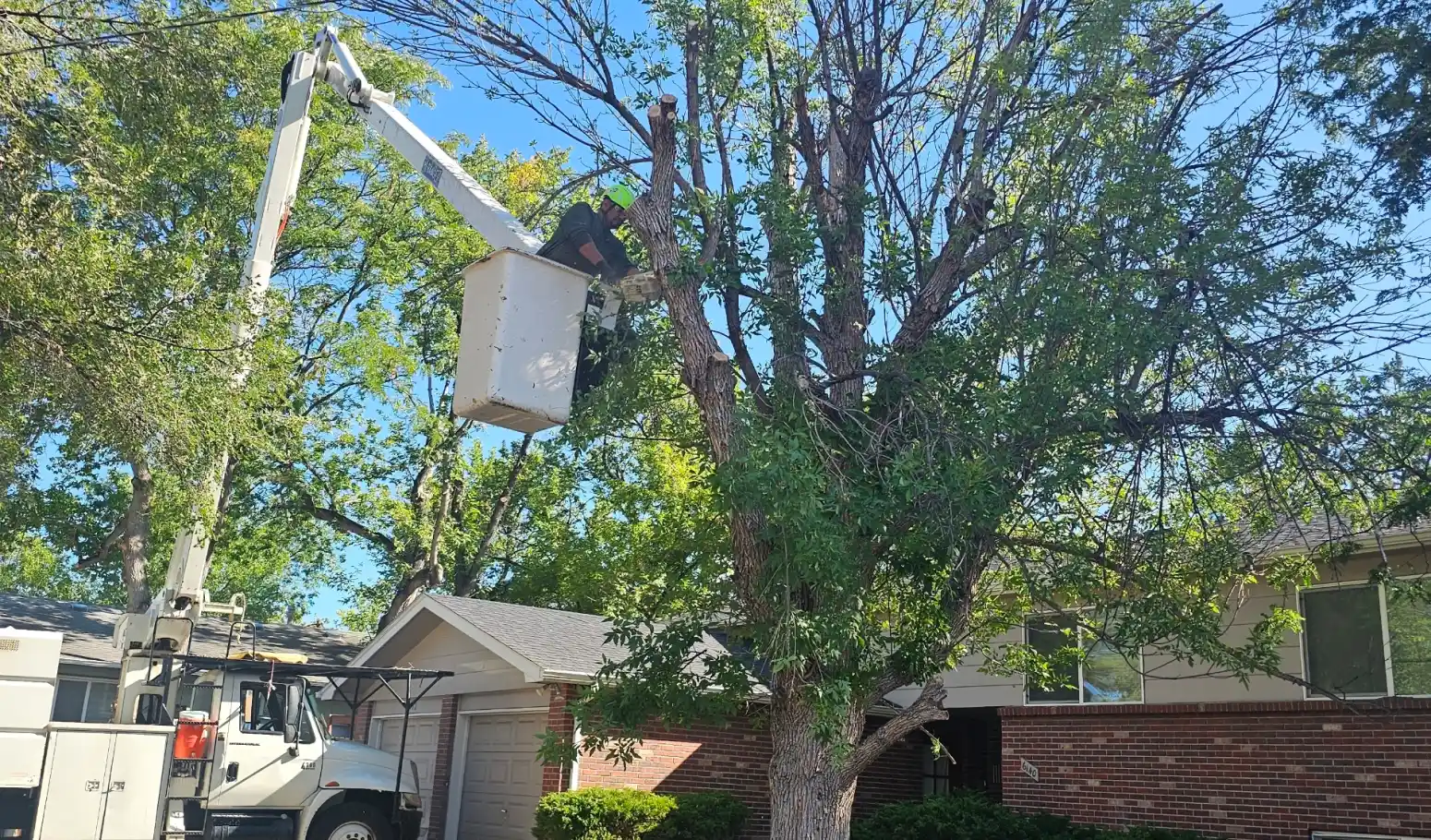
Many homeowners underestimate the complexity and danger of larger jobs. Working from ladders near trees is inherently unstable. Branches you’re cutting can kick back unpredictably. Trees near power lines require specialized training and equipment. If you’re considering a job that makes you nervous, that feeling is your instinct telling you to call professionals. Companies like Arbor Tech, LLC have the training, equipment, and insurance to handle complex jobs safely—and they can often complete in hours what might take you all weekend.
At Arbor Tech, LLC, we’ve seen firsthand how proper tree care protects both your property and your investment in your landscape. While we encourage homeowners to handle basic maintenance that’s within their comfort zone, we’re always here when you need expertise with larger projects, emergency situations, or simply want the job done right the first time. Our team serves Wheat Ridge, Arvada, Lakewood, Denver, and communities throughout the Front Range with 24-hour emergency service, because we know that tree problems don’t always happen during business hours.
Whether you’re ready to tackle some DIY trimming or you’d like a professional assessment of your trees’ health and safety, we’re here to help. Give us a call at 3032799337 or reach out at donald@arbortechtree.net to discuss your tree care needs.